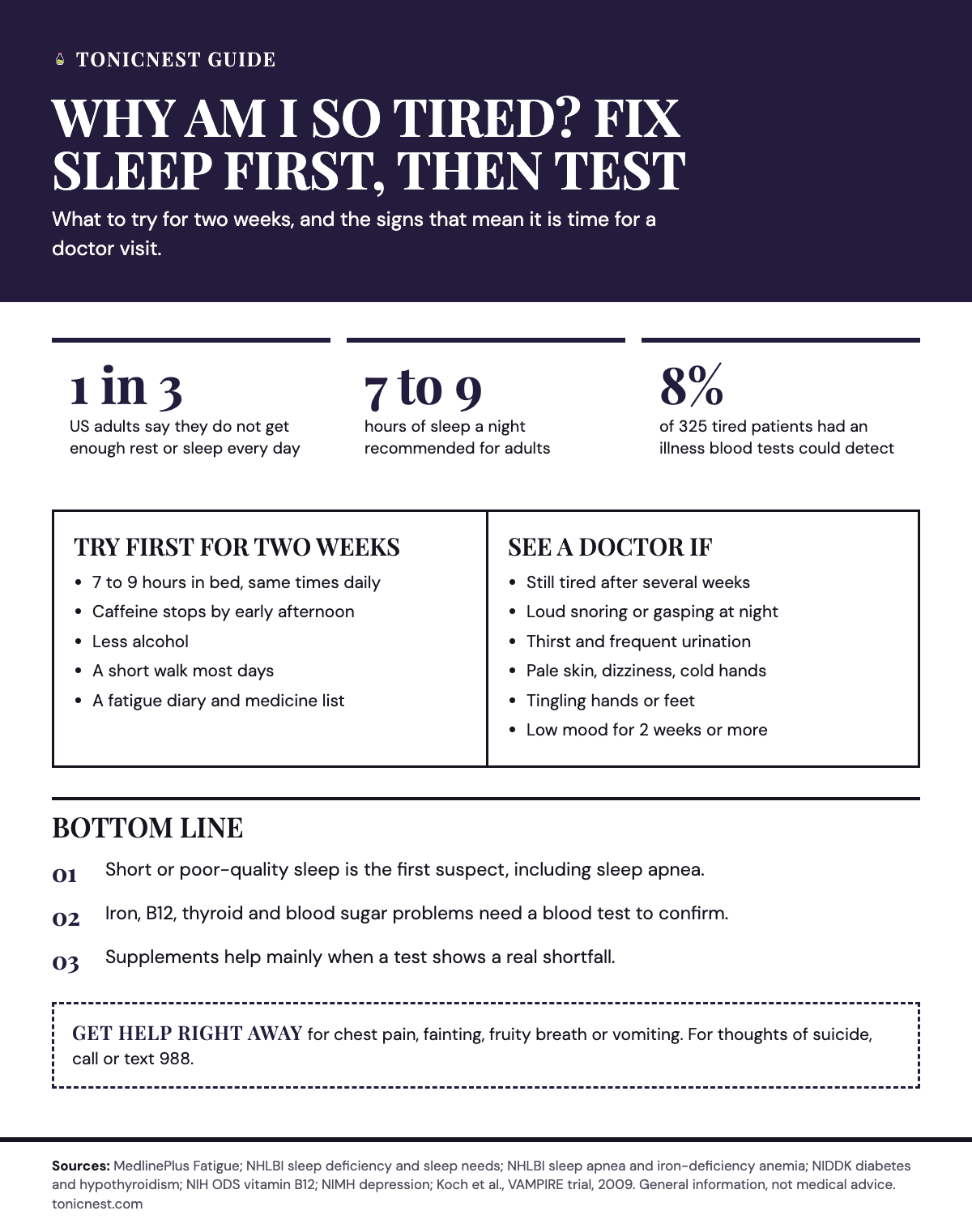
Most ongoing tiredness comes from too little or poor-quality sleep, sleep apnea, iron deficiency anemia, an underactive thyroid, low vitamin B12, depression, diabetes or medicine side effects. About 1 in 3 US adults say they do not get enough sleep. If tiredness lasts several weeks despite better sleep, see your provider. A short, targeted set of blood tests finds a physical cause in about 8% of cases.
On this page
- Why am I so tired all the time?
- What are the most common causes of fatigue?
- Why am I always tired even after a full night’s sleep?
- Why do I feel so tired and weak? Iron, B12 and thyroid
- Why am I so tired and have no energy?
- When should you see a doctor for feeling tired all the time?
- Which tests help find out why you are always tired?
- Do supplements help if you feel tired all the time?
- Bottom line
- FAQ
Why am I so tired? For most people the cause is sleep, a common deficiency, a mood problem or a medicine, and each one can be checked. We read the MedlinePlus and NIH pages on fatigue, sleep, anemia, thyroid disease, vitamin B12, depression and diabetes, a 2023 review in American Family Physician, and two trials on blood tests and iron for tired patients.
Most ongoing tiredness traces back to too little or poor-quality sleep, low iron, an underactive thyroid, low B12, depression, sleep apnea, diabetes or a side effect of medicine, and tiredness that lasts several weeks is worth a visit to your provider.[1][10]
| What it is | Fatigue is weariness or lack of energy. It is a symptom, not a disease.[1] |
|---|---|
| How common | Fatigue is among the top 10 reasons people visit primary care.[10] |
| Most common driver | About 1 in 3 US adults say they do not get enough rest or sleep every day.[2] |
| Medical causes to rule out | Anemia, thyroid disease, diabetes, sleep apnea, depression and infections, among others.[1] |
| When to see a doctor | When tiredness has not improved after several weeks.[1] |
| What tests find | In one trial of 325 patients, blood tests found a physical illness in 8%.[11] |
| Supplements | Iron helped tired women with low ferritin in one trial; it is not a general energy fix.[12] |
Why am I so tired all the time?
Ongoing tiredness is a symptom with many possible causes, and short or poor sleep is the most common one. MedlinePlus lists normal triggers such as hard exercise, stress, boredom and lack of sleep, alongside medical problems, treatments and habits like alcohol, heavy caffeine and too little or too much exercise.[1]
Doctors sort fatigue into three groups. Physiologic fatigue comes from how you live and usually improves with better sleep, food and pacing. Secondary fatigue comes from another condition and gets better when that condition is treated. Chronic fatigue lasts six months or more.[10]
Tiredness and sleepiness are not the same thing. Sleepiness means you nod off easily. Fatigue means you feel drained even when you are awake and alert. Nearly 40% of US adults say they fall asleep during the day without meaning to at least once a month, which points more toward a sleep problem than a blood problem.[2]
If you have more questions about how energy and aging connect, our energy and longevity guides cover the research on common energy supplements.
What are the most common causes of fatigue?
The most common causes of fatigue are short sleep, sleep disorders, anemia, thyroid disease, low vitamin B12, depression, diabetes and medicine side effects. Each one has a few clues that point toward it, and most can be checked with a simple history, an exam or a basic blood test.[1][10]
| Cause | Clues that point to it | How it is checked |
|---|---|---|
| Too little sleep | Under 7 hours most nights, catching up on weekends[3] | Sleep diary |
| Sleep apnea | Loud snoring, gasping, morning headache, waking to urinate[4] | Sleep study |
| Iron deficiency anemia | Pale skin, dizziness, cold hands and feet, short of breath[5] | CBC and ferritin blood tests |
| Underactive thyroid | Weight gain, feeling cold, dry skin, thinning hair, heavy periods[6] | Thyroid blood tests |
| Low vitamin B12 | Numb or tingly hands and feet, sore tongue, poor balance[7] | B12 blood test |
| Depression | Low mood or loss of interest for at least 2 weeks[8] | Talk with a provider |
| Diabetes | Thirst, frequent urination, blurred vision, slow-healing sores[9] | Blood glucose or A1C test |
| Medicines | Started after a new antihistamine, antidepressant, nausea or pain medicine[1] | Medicine review |
Other causes include infections, heart, kidney, liver and lung disease, untreated pain, recent surgery and cancer treatment.[1] Pregnancy is a normal cause too.[1]
Why am I always tired even after a full night’s sleep?
If you feel tired after 7 or more hours in bed, the problem is often sleep quality, and sleep apnea is a leading suspect. In sleep apnea, breathing stops and restarts many times during the night, so you can spend enough hours in bed without getting restful sleep.[4]
Adults need 7 to 9 hours a night, and teens need 8 to 10.[3] NHLBI estimates that 50 to 70 million Americans have a chronic sleep disorder.[2] It also notes a common myth: people cannot train themselves to run well on little sleep.[2]
Signs of sleep apnea include:
- Frequent loud snoring, or a partner who notices you stop breathing or gasp for air[4]
- Daytime sleepiness that makes it hard to focus or react[4]
- Dry mouth or headache when you wake up[4]
- Waking up often in the night to urinate[4]
Fatigue, headache and insomnia are more common signs of sleep apnea in women, so women can miss the diagnosis if they only look for snoring.[4] A sleep study confirms it.
Caffeine late in the day, alcohol and staying up late can all cut into deep sleep.[1]
Why do I feel so tired and weak? Iron, B12 and thyroid
Low iron, low vitamin B12 and an underactive thyroid are the three blood-test causes most often behind tiredness with weakness. All three can build slowly, so symptoms creep up over months or years instead of arriving overnight.[5][6][7]
Iron deficiency anemia
Iron deficiency is the most common type of anemia.[5] Mild cases may cause no symptoms. More serious cases bring fatigue, shortness of breath, dizziness, pale skin and cold hands and feet.[5] A doctor checks a complete blood count, hemoglobin, blood iron and ferritin.[5] Blood loss, including heavy periods, and pregnancy raise the risk.[5]
Underactive thyroid
Nearly 5 out of 100 Americans age 12 and older have hypothyroidism, though most cases are mild.[6] It is more common in women and in people over 60.[6] NIDDK notes that fatigue and weight gain are common and do not on their own mean you have a thyroid problem, which is why a blood test is needed to confirm it.[6]
Low vitamin B12
Adults need 2.4 mcg of vitamin B12 a day.[7] Deficiency affects between 3% and 43% of older adults, often because they make less stomach acid.[7] Vegans, people with celiac or Crohn’s disease, people who had stomach surgery and long-term users of acid reducers or metformin are also at higher risk.[7] Your body stores 1,000 to 2,000 times a day’s intake, so symptoms can take years to show.[7]
Why am I so tired and have no energy?
Feeling tired with no energy or drive for two weeks or more can be a sign of depression, which NIMH lists as fatigue, lack of energy or feeling slowed down. Depression is diagnosed when symptoms are present most of the day, nearly every day, for at least 2 weeks.[8]
Antidepressants usually take 4 to 8 weeks to work, and sleep, appetite and focus often improve before mood does.[8] Talk therapy is another common option.[8]
Diabetes can also drain energy. Its common symptoms are increased urination, strong thirst, hunger after eating, blurred vision, fatigue, sores that heal slowly and frequent infections.[9] Type 2 diabetes can develop slowly over several years, and many people have no symptoms at all.[9]
Medicines are an easy cause to overlook. Antidepressants, antihistamines and medicines for nausea and pain can all cause fatigue.[1] Never stop a prescribed medicine on your own. Ask your doctor or pharmacist whether a dose change, a different time of day or a different drug could help.
A smaller group of people have myalgic encephalomyelitis/chronic fatigue syndrome (ME/CFS). Their fatigue does not improve with rest and limits normal daily life.[1] The key sign is a crash after effort, and in this condition pushing through with hard exercise can make things worse.[10]
When should you see a doctor for feeling tired all the time?
See your provider if tiredness has not improved after several weeks of better sleep and habits, or sooner if it comes with other symptoms. Your provider will ask about your sleep, daily activity, appetite and exercise, examine you and may order lab tests.[1]
See a doctor right away, or call 911, if tiredness comes with:
- Chest pain or shortness of breath[5]
- Fruity-smelling breath, vomiting, belly pain or trouble breathing, which can be signs of diabetic ketoacidosis[9]
- Fainting[9]
- Thoughts of suicide. Call or text 988 to reach the Suicide and Crisis Lifeline.[8]
Book a regular appointment soon if you notice:
- Unexplained weight loss, extreme thirst or frequent urination[9]
- Loud snoring or pauses in breathing that someone else has noticed[4]
- Numbness or tingling in your hands or feet[7]
- Low mood or loss of interest that has lasted 2 weeks or more[8]
Before the visit, keep a fatigue diary for a week or two. Note when you feel worst, how you slept, what you ate and any new medicines. It helps you and your provider spot patterns.[1]
Which tests help find out why you are always tired?
A short, targeted set of blood tests helps most when your history or exam points to a cause; a long panel run on everyone mostly adds false alarms. In the Dutch VAMPIRE trial of 325 patients with new, unexplained fatigue, blood tests found a physical illness in 8% of them.[11]
That same trial found that bigger test panels produced more false-positive results, and that waiting 4 weeks before testing did not change what was found.[11] This is why many doctors start with a few basic tests and a careful history, then add more only if needed.
Tests your provider may choose from, based on your symptoms:
- Complete blood count and ferritin, for anemia and low iron[5]
- Thyroid blood tests[6]
- Vitamin B12 level, especially if you are older, vegan or take metformin or an acid reducer[7]
- Blood glucose or A1C, for diabetes[9]
- A sleep study, if snoring or breathing pauses are reported[4]
A decision table: match your clues to a test
| If you also have | Ask your provider about |
|---|---|
| Heavy periods, pale skin, cold hands | CBC and ferritin[5] |
| Weight gain, feeling cold, dry skin | Thyroid blood tests[6] |
| Tingling feet, vegan diet, metformin use | Vitamin B12 level[7] |
| Thirst, frequent urination, blurred vision | Blood glucose or A1C[9] |
| Snoring, gasping, morning headaches | Sleep study[4] |
| Low mood or no interest for 2+ weeks | Depression screening[8] |
| Crashes after effort, rest does not help | Assessment for ME/CFS[10] |
Do supplements help if you feel tired all the time?
A supplement helps tiredness mainly when it corrects a confirmed shortfall, such as low iron or low B12; there is little evidence that energy blends help people with normal levels. Get tested before you buy, because the right fix depends on the cause.[10][12]
| Study | Who | Dose and length | Result |
|---|---|---|---|
| Vaucher, CMAJ 2012 | 198 women aged 18 to 53 with ferritin under 50 and normal hemoglobin | 80 mg iron a day for 12 weeks | Fatigue scores fell 47.7% with iron vs 28.8% with placebo; no change in mood or quality of life[12] |
| Koch, Br J Gen Pract 2009 | 325 patients with unexplained fatigue | Blood tests, now or after 4 weeks | 8% had an illness the tests could detect[11] |
| NIH ODS B12 fact sheet | Adults with low B12 | Fortified foods or supplements | Recommended for people over 50; high-dose pills are only partly absorbed[7] |
Let a blood test guide iron. The Vaucher trial enrolled only women with low ferritin, so its result does not carry over to people with normal iron.[12] Common energy ingredients have had little testing in tired but otherwise healthy adults. Our reviews of CoQ10 benefits and dosage and NMN supplement benefits show how thin the energy evidence is in healthy adults. If stress keeps you awake, our guide to ashwagandha benefits and side effects, including liver risks covers the sleep trials. You can see how we grade studies on our how we review page.
What doctors use first
For tiredness from daily life, the standard first steps are sleep habits, a healthy diet and balancing activity with rest.[10] For secondary fatigue, the fix is treating the cause: iron for iron deficiency, thyroid hormone for hypothyroidism, B12 for B12 deficiency, CPAP or other breathing devices for sleep apnea, and therapy or medicine for depression.[10][5][6][4] A supplement is never a replacement for that care.
A two-week checklist before your appointment
- Aim for 7 to 9 hours in bed at the same times each day.[3]
- Stop caffeine by early afternoon and cut back on alcohol.[1]
- Take a short walk most days; regular activity helps energy.[1]
- Keep a fatigue diary with sleep, food, mood and energy notes.[1]
- Ask a partner whether you snore or stop breathing at night.[4]
- List every medicine and supplement you take for your provider.[1]
- If you buy iron or B12, check the label for the exact amount per serving and buy only after a blood test shows you need it.[7][12]
Bottom line
Most people who ask why they are so tired have a cause that can be found. Sleep comes first: under 7 hours, poor-quality sleep or sleep apnea explains a large share of daily tiredness.[2][3] Low iron, low B12, thyroid disease, depression, diabetes and medicines make up much of the rest.[1]
For most people, two weeks of steady sleep and a fatigue diary is the better first step before buying any energy product, because it either fixes the problem or gives your provider the clues needed to pick the right tests. If tiredness lasts several weeks, comes with weight loss, thirst, snoring or low mood, see your provider and ask for a short, targeted set of tests.[1][11]
Frequently asked questions
Why am I so sleepy during the day?
Daytime sleepiness usually means you are not getting enough sleep or good-quality sleep. Nearly 40% of US adults nod off during the day without meaning to at least once a month. Loud snoring or gasping points to sleep apnea, which a sleep study can confirm.
Is it normal to feel tired all the time?
Feeling tired after hard work, stress or a short night is normal. Feeling tired most days for several weeks is not something to ignore. MedlinePlus advises contacting your provider when fatigue does not improve after several weeks of rest and better habits.
Can too much caffeine make you more tired?
Yes, indirectly. Caffeine from coffee, tea, soda or chocolate can keep you from getting a good night's sleep, which leaves you more tired the next day. Stopping caffeine by early afternoon is a simple first change to try.
Does exercise help when you feel tired all the time?
For most people, regular moderate activity improves sleep and energy. The exception is ME/CFS, where the key sign is a crash after effort and hard exercise can make symptoms worse. In that case, pacing activity with a provider is the safer approach.
What blood tests check for tiredness?
Common choices are a complete blood count and ferritin for iron, thyroid tests, a vitamin B12 level and blood glucose or A1C for diabetes. Doctors pick tests based on your symptoms, because large panels run on everyone produce more false-positive results.
Sources
- Fatigue. MedlinePlus, National Library of Medicine
- What Are Sleep Deprivation and Deficiency?. National Heart, Lung, and Blood Institute, 2022
- How Much Sleep Is Enough?. National Heart, Lung, and Blood Institute, 2022
- Sleep Apnea: Symptoms. National Heart, Lung, and Blood Institute, 2025
- Iron-Deficiency Anemia. National Heart, Lung, and Blood Institute
- Hypothyroidism (Underactive Thyroid). National Institute of Diabetes and Digestive and Kidney Diseases
- Vitamin B12 Fact Sheet for Consumers. NIH Office of Dietary Supplements
- Depression. National Institute of Mental Health
- Symptoms and Causes of Diabetes. National Institute of Diabetes and Digestive and Kidney Diseases
- Fatigue in Adults: Evaluation and Management. Latimer KM et al., American Family Physician, 2023
- Ordering blood tests for patients with unexplained fatigue in general practice: results of the VAMPIRE trial. Koch H et al., British Journal of General Practice, 2009
- Effect of iron supplementation on fatigue in nonanemic menstruating women with low ferritin. Vaucher P et al., CMAJ, 2012
This article is general information, not medical advice. Dietary supplements are not reviewed by the FDA for safety or effectiveness before they are sold. Talk to your doctor before you start any supplement, especially if you are pregnant, nursing, take medication or have a health condition.