Tinnitus Relief
What Causes Tinnitus: Common Causes, Triggers and Red Flags
Most tinnitus comes with some hearing loss, usually from aging or loud noise. Other causes include earwax, ear infections, certain medicines such…
Independent reviews of premium supplements
A $59 bottle should earn its price with real doses, better forms and proof of testing. We read the Supplement Facts panel, set every dose beside the human research, work out the cost per day and read the refund terms before you pay.
The index
Buyer checklist
Six checks that take ten minutes and can save you the cost of a six-bottle bundle.
Divide the bottle price by the number of servings. Then find the amount per serving of the main ingredient on the Supplement Facts label. A $59 bottle is only better value if that amount is higher too.
Premium labels often name a special form, such as methylcobalamin for vitamin B12. NIH says research has not shown that any form of supplemental B12 works better than the others. A pricier form needs human evidence.
Testing groups such as USP, ConsumerLab.com and NSF International let products that pass their checks carry a seal. It means the bottle holds what the label lists, without harmful levels of contaminants. It does not prove the product works.
Adults need 2.4 mcg of vitamin B12 a day, yet some bottles hold 1,000 mcg per serving. NIH notes that taking more than you need costs more and might raise your risk of side effects.
Most products sold through ClickBank have a sixty day refund period, and the request option disappears once it passes. Mark the last day on your calendar before the first bottle even arrives.
Supplements can interact with medicines, and some raise bleeding risk before surgery. CoQ10, common in heart and energy formulas, may interact with warfarin and insulin. A pharmacist can check the full ingredient list against your prescriptions.
Label decoder
Every supplement sold in the US carries this panel. Six parts tell you most of what a premium price is paying for.
This is the most the label tells you to take at one time. If the directions say 1 to 3 capsules, three capsules make one serving. Count how many days the bottle really lasts.
Each active ingredient is listed with its dose per serving. This number is what your premium price actually buys, so compare it with the amounts used in published research.
A blend shows one total weight and lists its ingredients from most to least by weight. Single amounts stay hidden, so a costly ingredient could be a large dose or a trace.
This line lists fillers, binders and flavorings. They are not the reason you are paying a premium. Check them anyway if you have an allergy or a diet rule to follow.
Look for the small print tied to each benefit claim. It says the FDA has not evaluated the statement, and that the product is not intended to diagnose, treat, cure or prevent any disease.
A USP, NSF or ConsumerLab.com seal means an independent group checked that the contents match the label and found no harmful levels of contaminants. It is not a verdict on whether the formula works.
Evidence snapshot
Grades describe the human evidence for the use each ingredient is sold for, not whether a product works.
| Ingredient | Often sold for | What the research shows | Evidence |
|---|---|---|---|
| Omega-3 (fish oil) | Heart health, mood | A 2020 review of 86 studies found more EPA and DHA slightly lowered the risk of coronary events and coronary death. Benefit for depression is uncertain. Side effects are usually mild. Source: NCCIH: Omega-3 Supplements | Moderate |
| Probiotics | Gut health, digestion | Moderate quality studies suggest some probiotics lower the chance of diarrhea from antibiotics. Effects differ by strain, and some products held microbes not listed on the label. Source: NCCIH: Probiotics | Limited |
| Magnesium | Sleep, cramps, blood pressure | Supplements might lower blood pressure, but only by a small amount. Small studies found modest drops in migraine frequency. Above 350 mg a day from pills, it can cause diarrhea and cramping. Source: NIH ODS: Magnesium (archived copy) | Limited |
| Melatonin | Sleep | May help jet lag and a delayed sleep schedule. Guidelines say evidence is too weak to recommend it for chronic insomnia. In a 2023 study, 22 of 25 gummy products were mislabeled. Source: NCCIH: Melatonin | Limited |
| Vitamin B12 (methylcobalamin) | Energy, nerve health | Most people in the US get enough from food. No supplement form has been shown better than another. High doses such as 1,000 mcg are considered safe, but the body absorbs only a small share. Source: NIH ODS: Vitamin B12 (archived copy) | Limited |
| Coenzyme Q10 | Heart, energy, statin muscle aches | Overall evidence does not support it for statin muscle pain. It probably has no meaningful effect on blood pressure. It may interact with warfarin and insulin. Source: NCCIH: Coenzyme Q10 | Weak |
| Rhodiola | Stress, energy, focus | There is not enough reliable evidence to say it helps with any health purpose. It is possibly safe for up to 12 weeks. Dizziness, headache and insomnia have been reported. Source: NCCIH: Rhodiola | Weak |
| Bitter orange (synephrine) | Fat burning, energy | Not clearly shown to help with anything. Heart rhythm problems, heart attacks and strokes were reported with products containing it. FDA testing found 6 of 59 products spiked with synthetic amines not allowed in supplements. Source: NCCIH: Bitter Orange | Avoid |
Red flags
We look for each of these on every product page we review, and we tell you when we find one.
Photos of doctors, molecules and medical journals suggest scientific proof without stating any. The FTC says such images can imply a product is clinically proven, and the seller must be able to back that up. FTC Health Products Compliance Guidance (archived copy)
This phrase implies the test proved a benefit. If one ingredient was tested alone, that study may not support the whole formula. The FTC says the mix itself may need its own clinical test. FTC Health Products Compliance Guidance (archived copy)
Absorption is the usual excuse for a higher price. The FTC gives an example of an absorption claim built on animal and test tube studies and says that evidence alone is not enough. FTC Health Products Compliance Guidance (archived copy)
A proprietary blend only has to show its total weight and the order of its ingredients. You pay a premium for a list of names, not a list of doses you can compare. FDA Dietary Supplement Labeling Guide (archived copy)
Lines like "people who eat this live longer" usually come from observational studies. The FTC notes these can show an association but do not prove the ingredient caused the result. FTC Health Products Compliance Guidance (archived copy)
The FDA calls products that claim to treat or cure a condition without proof health fraud. They waste money and can delay a real diagnosis and treatment. FDA: Health Fraud Scams (archived copy)
Refund playbook
Most ClickBank products have a sixty day refund period. Once it ends, the refund option is no longer shown and you must contact the seller yourself. Write the final date down when you order.
The FTC suggests checking who pays return shipping, how many days you have, and whether there is a restocking fee. Sale and bundle pricing can come with different return rules.
A ClickBank purchase appears as CLKBANK* on your card statement. To look it up, use your order number. Without it, the zip code or the last four digits of the card used will work.
On CLKBank.com, look up the order, click Request A Refund, choose a reason from the topic menu and send the ticket. If you paid with PayPal, you can ask PayPal for the refund instead.
If you were billed for something you did not accept or receive, send a written dispute. The FTC says it must reach the issuer within 60 days of the first bill showing the error. Include copies of receipts, not originals.
Safety first
Myths
A higher price means a stronger product.
Price says nothing about what is in the bottle. FDA tests found only 5 of 23 bitter orange products close to their labeled synephrine amount, and melatonin gummies ranged from 74 to 347 percent of the label.
"Clinically dosed" means the product was tested.
Usually it means one ingredient matches a dose from someone else’s study. The FTC says a test of an isolated ingredient may not prove that a multi-ingredient product delivers the same benefit.
A premium form absorbs better, so it works better.
NIH says no form of supplemental B12 has been shown better than the others. The FTC says animal and test tube studies cannot support an absorption claim on their own.
More milligrams means more value.
Past what you need, extra milligrams add cost and might add side effects. Magnesium from pills above 350 mg a day can cause diarrhea, nausea and cramping.
Hundreds of five star reviews prove it works.
The FTC says testimonials are not proof, and a "results not typical" note does not fix a misleading one. Some reviews are fake or paid for without saying so.
Health guides
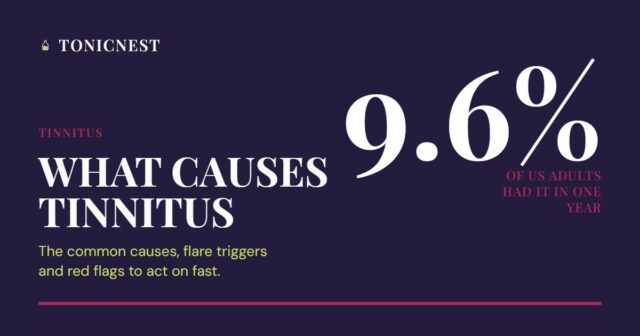
Most tinnitus comes with some hearing loss, usually from aging or loud noise. Other causes include earwax, ear infections, certain medicines such…
Enlarged prostate symptoms include a weak or stop-and-go urine stream, trouble starting, dribbling, urgency and waking at night to urinate. They come…
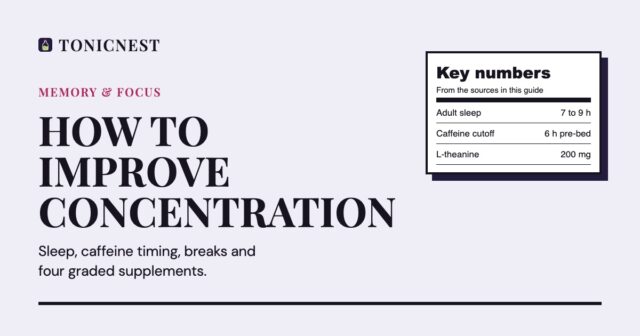
To improve concentration, start with sleep: adults need 7 to 9 hours, and sleep loss hits attention harder than anything else. Then…
Most adults need 22 to 34 grams of fiber a day, based on 14 grams for every 1,000 calories. That is 28…
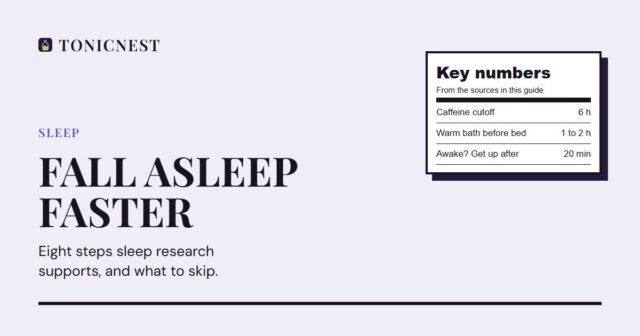
To fall asleep fast, stop caffeine at least 6 hours before bed, take a warm bath or shower 1 to 2 hours…
Most ongoing tiredness comes from too little or poor-quality sleep, sleep apnea, iron deficiency anemia, an underactive thyroid, low vitamin B12, depression,…
Why read us
We start every review with the amount per serving, then work out the cost per day. A premium price should buy a meaningful dose, not a longer label.
Every factual claim links to the NIH, FDA, FTC or ClickBank page it came from, with the date we read it. If you disagree with us, you can check the same page.
Sellers cannot buy a review, a grade or a ranking, and we turn down free products. Affiliate links never change what the evidence section says.
We do not test products in a lab and we are not clinicians. We say so plainly, and we tell you when a doctor or pharmacist is the better person to ask.
Meet the editor
Reviews Editor
Owen Hartley is the Reviews Editor at TonicNest, where every review starts with one question: does a premium price buy anything you can check? Owen reads supplement labels line by line, compares each dose with the amounts used in human studies, looks for third-party test results, and works out the real cost per day across bundle offers. Owen also reads refund terms in full before a review goes live. Owen is a researcher and editor, not a medical professional.
Questions
No. We do not buy, take or lab-test the products we cover. We read the label, the sales page, the refund terms and the public research, then report what a careful buyer could check for themselves before paying a premium price.
Our editor, Owen Hartley, writes and checks our reviews and guides. Owen has no medical credentials and does not give medical advice. The work is comparing what a seller claims with the label, the price and what NIH, FDA and FTC pages say.
Some links on TonicNest are affiliate links. If you buy through one, we may earn a commission at no extra cost to you. Sellers cannot pay for a review, a better grade or a place on a list, and we do not accept free products.
No. TonicNest is consumer research about labels, prices and evidence. It cannot tell you whether a supplement is safe for your body. Ask your doctor or pharmacist before starting one, especially if you take medicine, are pregnant or have surgery planned.
We base each grade on the NIH or NCCIH page for that ingredient. Moderate means decent human studies point the same way. Limited means some benefit for narrow uses. Weak means little reliable evidence. Avoid means serious safety reports outweigh any shown benefit.
Many products sold through online ads cost $49 to $69 a bottle. We want to show what that money buys: a higher dose, a form backed by human studies, an independent quality seal, or mostly marketing. Sometimes the answer is a mix.
We fix it and add a dated note on the page explaining what changed. When a seller changes a price, a formula or a refund policy, we update the review. You can report an error to us through our contact page at any time.
Pay for doses, not for adjectives.
We check whether a premium supplement earns its price: the label, every dose against the research, the cost per day and the refund terms. No star ratings, no fake testimonials, no paid placements.
Edited by Owen Hartley, Reviews Editor
TonicNest is general information, not medical advice. Dietary supplements are not reviewed by the FDA for safety or effectiveness before they are sold. Talk to your doctor before you start, stop or combine supplements. Some links are affiliate links: if you buy through them we may earn a commission at no extra cost to you, and it never changes what we report.